

Williams Lab
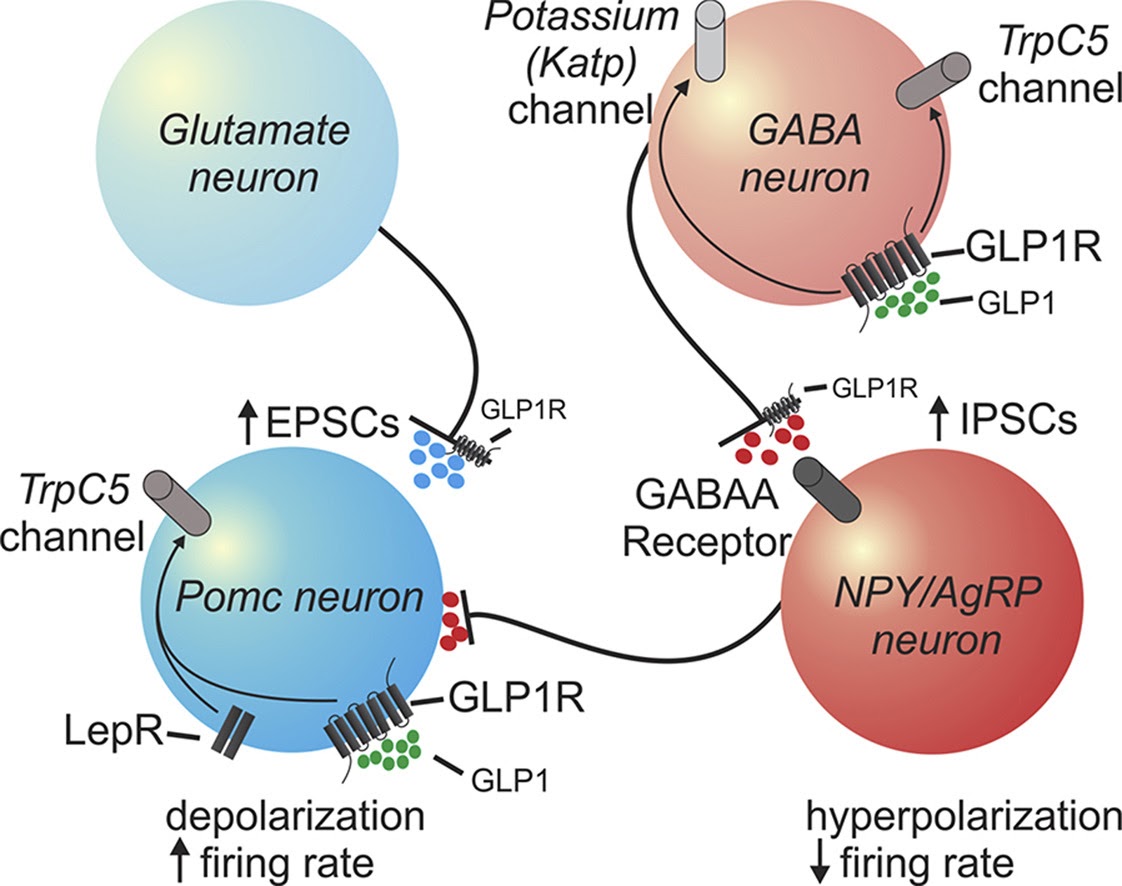
Cellular mechanisms required for the anti-diabetes compound liraglutide. We identify critical molecular mechanisms/an ion channel linking anti-obesity/diabetes GLP-1 analogues in arcuate POMC and NPY/AgRP neurons with metabolism.
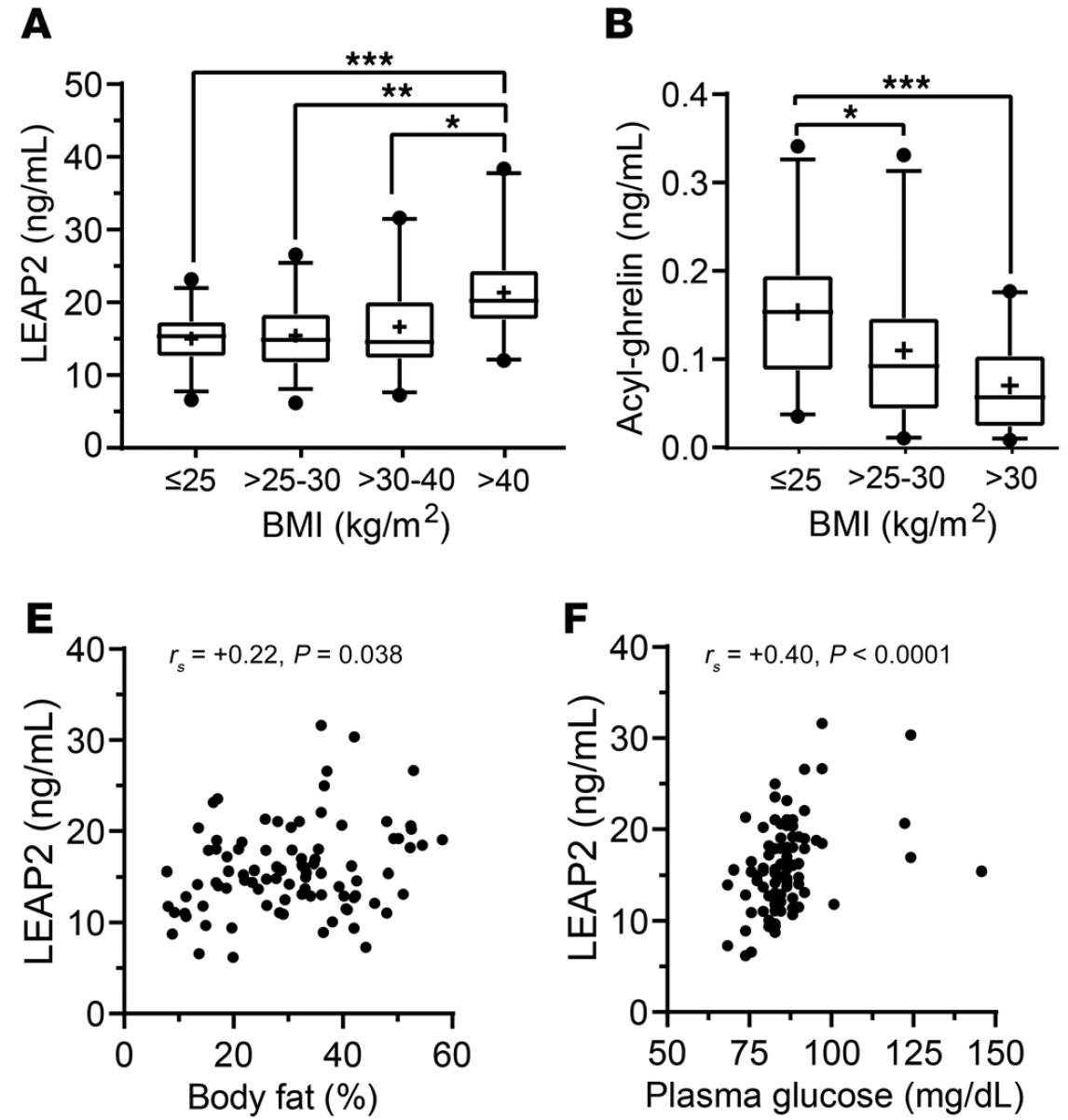
LEAP2 changes with body mass and food intake in humans and mice
Zigman Lab
This study was the first to measure the effects of various metabolic differences (body mass, feeding status, bariatric surgery) on human plasma LEAP2 levels.
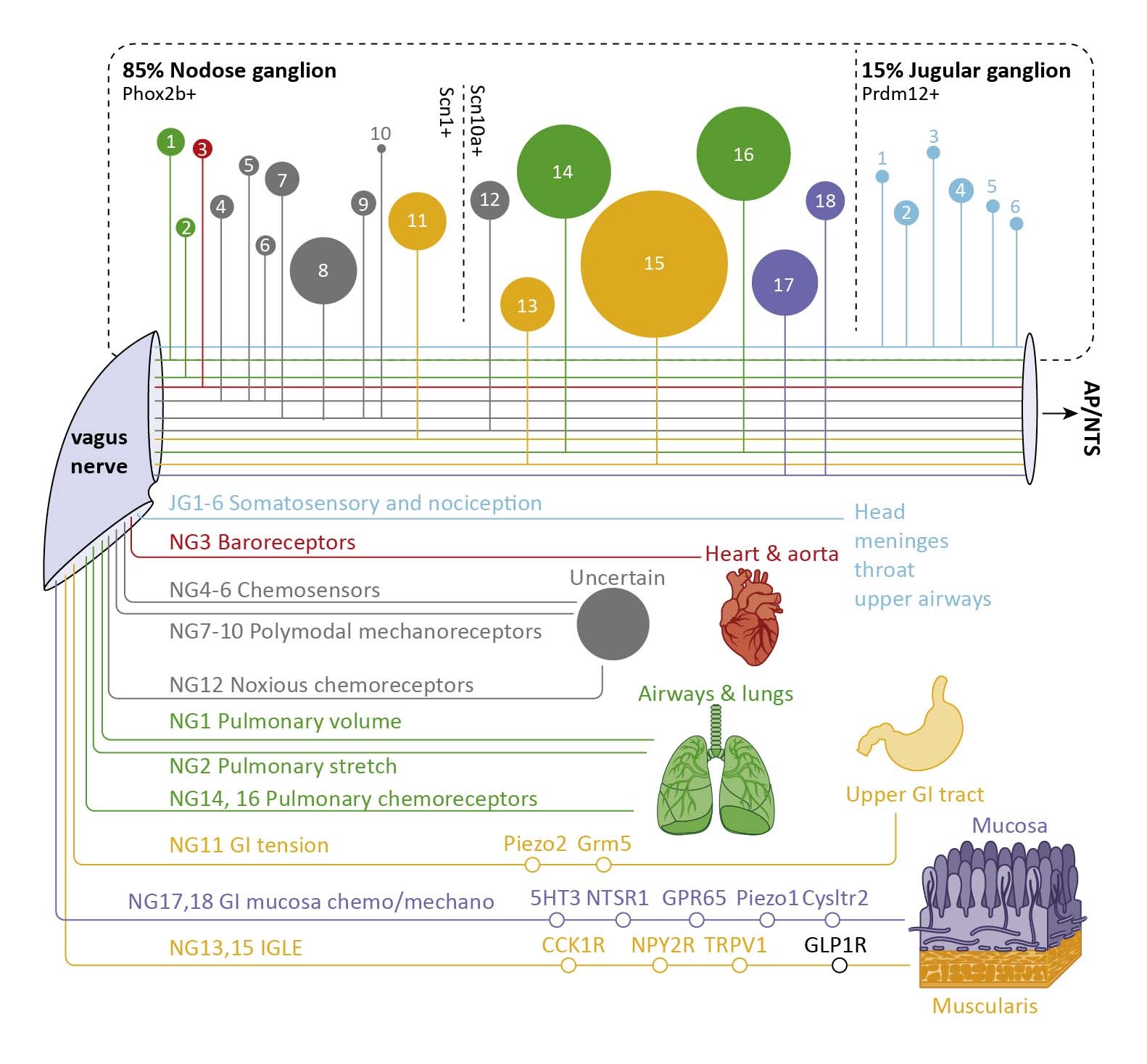
The Molecular Diversity of Vagal Afferents Revealed
Gautron Lab
The Gautron Lab is interested in understanding the molecular diversity of vagal afferents in the mouse. Color coding corresponds to neuronal subtypes connected to specific visceral areas (green, blue, purple, red) or uncertain areas (grey). The size of the circles corresponds to the relative proportions of each identified neuronal subtype. Abbreviations: AP/NTS: area postrema and nucleus of the solitary tract; NG, nodose ganglion; JG, jugular ganglion; GI, gastrointestinal; IGLE, intraganglionic laminar ending. From: Trends Neurosci. 2019 Oct;42(10):663-666.
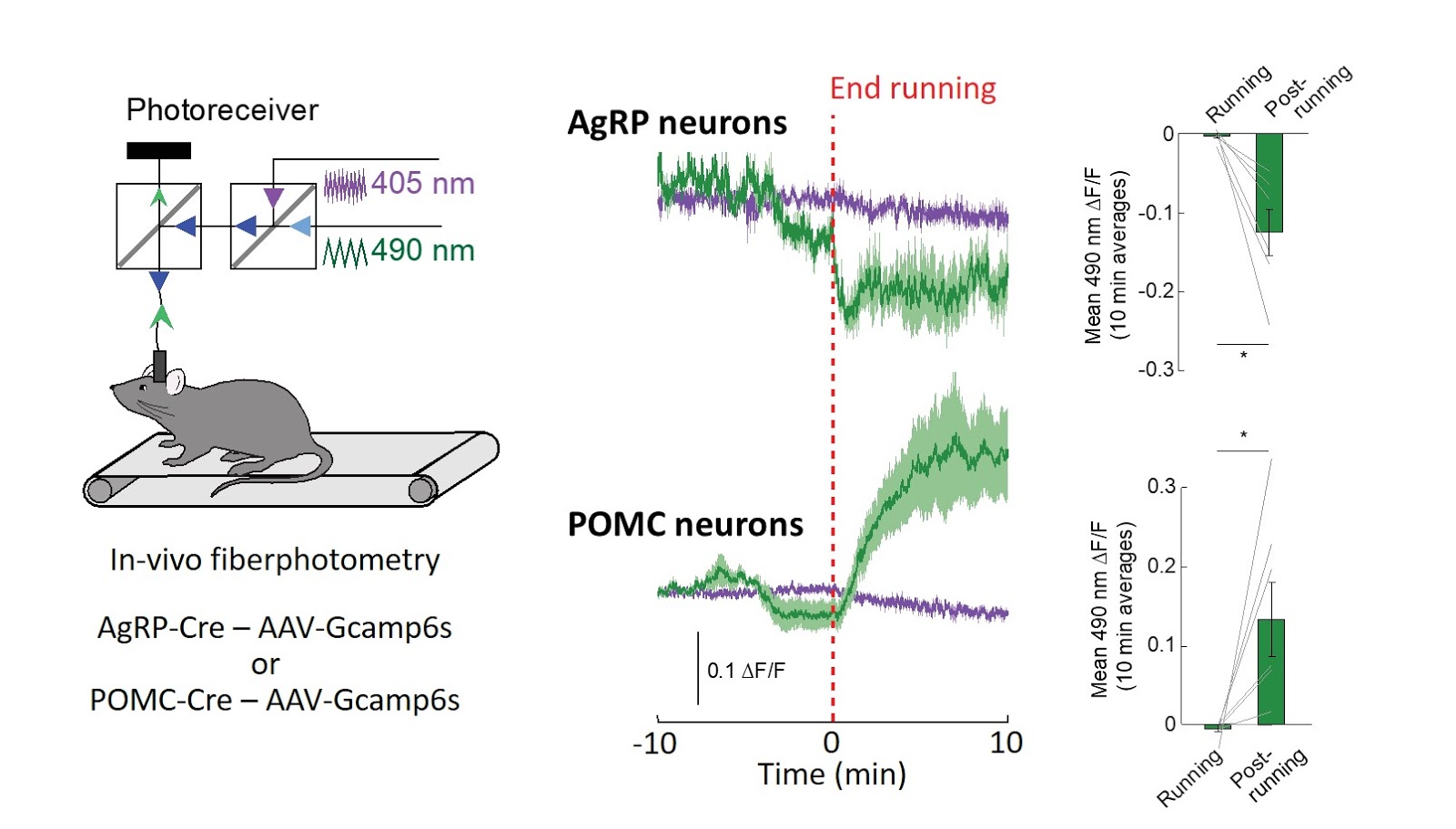
Cellular and synaptic reorganization of arcuate NPY/AgRP and POMC neurons after exercise
Williams Lab
Single workout can boost metabolism for days – We demonstrate that neurons in mice that influence metabolism are active for up to two days after a single workout. The research offers new insight into the brain’s potential role in fitness and – in the longer term – may provide a target for developing therapies that improve metabolism.
Elmquist Lab
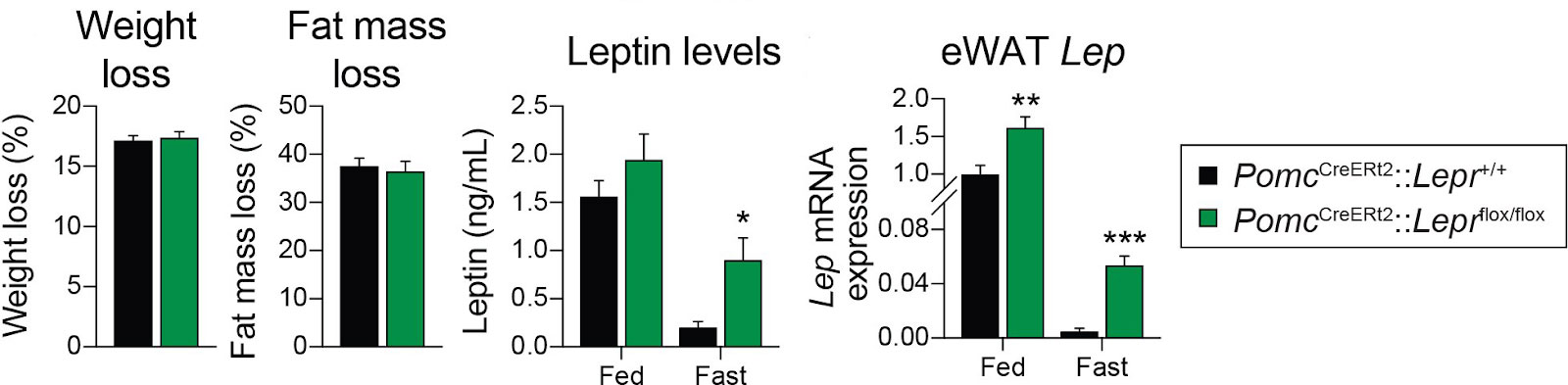
We found that pro-opiomelanocortin (POMC) cells that express leptin receptors (LEPR) are required for coordinating hepatic glucose production and for the fasting-induced fall in leptin levels, independent of changes in fat mass. We also identify a role for sympathetic nervous system regulation of the inhibitory adrenergic receptor (ADRA2A) in regulating leptin production. Collectively, our findings highlight a previously unrecognized role of POMC neurons in regulating leptin levels.
Elmquist Lab
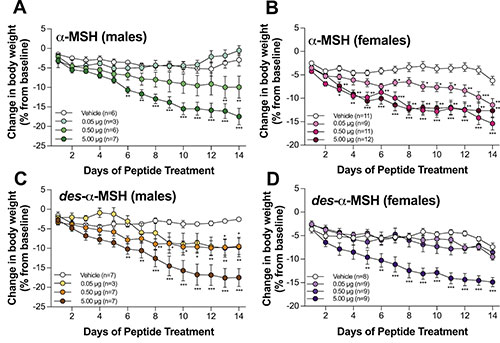
We found that replacement of either desacetyl-α-MSH or α-MSH into mice mouse model with a targeted mutation in the pro-opiomelanocortin (Pomc) gene significantly reverses excess body weight and fat mass gained compared to wild type (WT) (Pomcwt/wt) mice. This study shows that both desacetyl-α-MSH and α-MSH peptides as regulators of energy balance and highlight a previously unappreciated physiological role for desacetyl-α-MSH.

Ire1α in Pomc Neurons Is Required for Thermogenesis and Glycemia
Williams Lab
A molecular link between ER stress and leptin/insulin resistance. We show that Ire1α-Xbp1s and associated molecular targets link ER stress in arcuate Pomc neurons to aspects of normal energy and glucose homeostasis.

TrpC5 mediates acute leptin and serotonin effects via Pomc neurons
Williams Lab
Identification of an ion channel necessary for hormone and anti-obesity drug to suppress eating - We identified an ion channel required for brain cells to suppress eating behavior in response to the hormone leptin or to the anti-obesity drug lorcaserin.
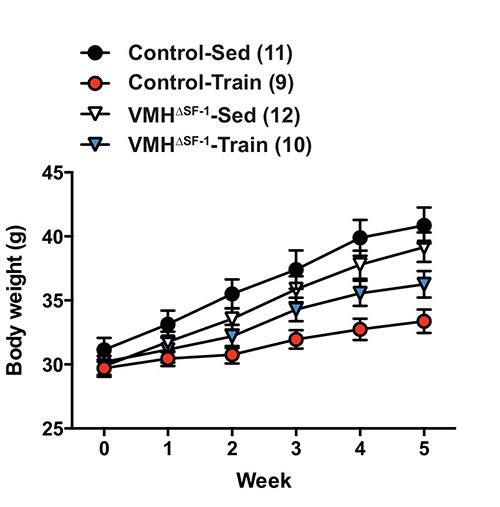
SF-1 expression in the hypothalamus is required for beneficial metabolic effects of exercise
Elmquist Lab
We found that the expression of the steroidogenic factor-1 (SF-1) nuclear receptor in ventromedial hypothalamus (VMH) neurons is required for the beneficial effects of exercise on metabolism. VMH-specific deletion of SF-1 blunts (a) the reductions in fat mass, (b) improvements in glycemia, (c) increases in energy expenditure that are associated with exercise training, and (d) attenuates metabolic responses of skeletal muscle to exercise, including induction of PGC-1α expression.
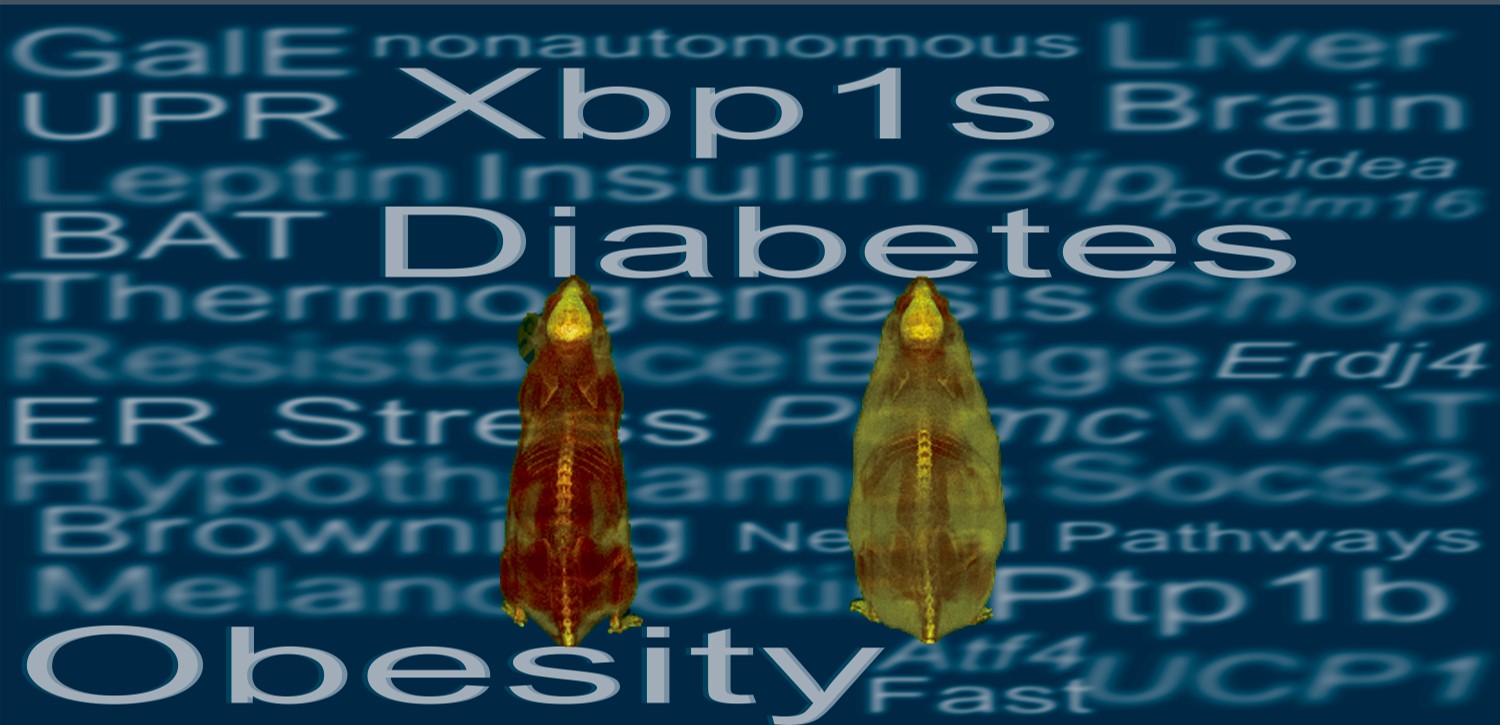
Xbp1s in Pomc neurons connects ER stress with energy balance and glucose homeostasis
Williams Lab
Cell-nonautonomous control of the UPR: Mastering energy homeostasis - Endoplasmic reticulum (ER) stress and activation of the unfolded protein response (UPR) in hypothalamic neurons are common features of obesity, resulting in leptin and insulin resistance. We demonstrate, for the first time, cell-nonautonomous UPR signaling between brain and liver in the context of glucoregulation.
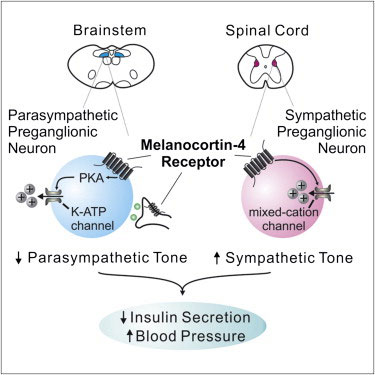
Melanocortin 4 receptors reciprocally regulate sympathetic and parasympathetic preganglionic neurons
Elmquist Lab
We found that melanocortin 4 receptor (MC4R) agonists inhibit parasympathetic preganglionic neurons in the brainstem. In contrast, MC4R agonists activate sympathetic preganglionic neurons in the spinal cord. Deletion of MC4Rs in cholinergic neurons resulted in elevated levels of insulin. Furthermore, re-expression of MC4Rs specifically in cholinergic neurons restores obesity-associated hypertension in MC4R null mice. These findings provide a cellular correlate of the autonomic side effects associated with MC4R agonists and demonstrate a role for MC4Rs expressed in cholinergic neurons in the regulation of insulin levels and in the development of obesity-induced hypertension.
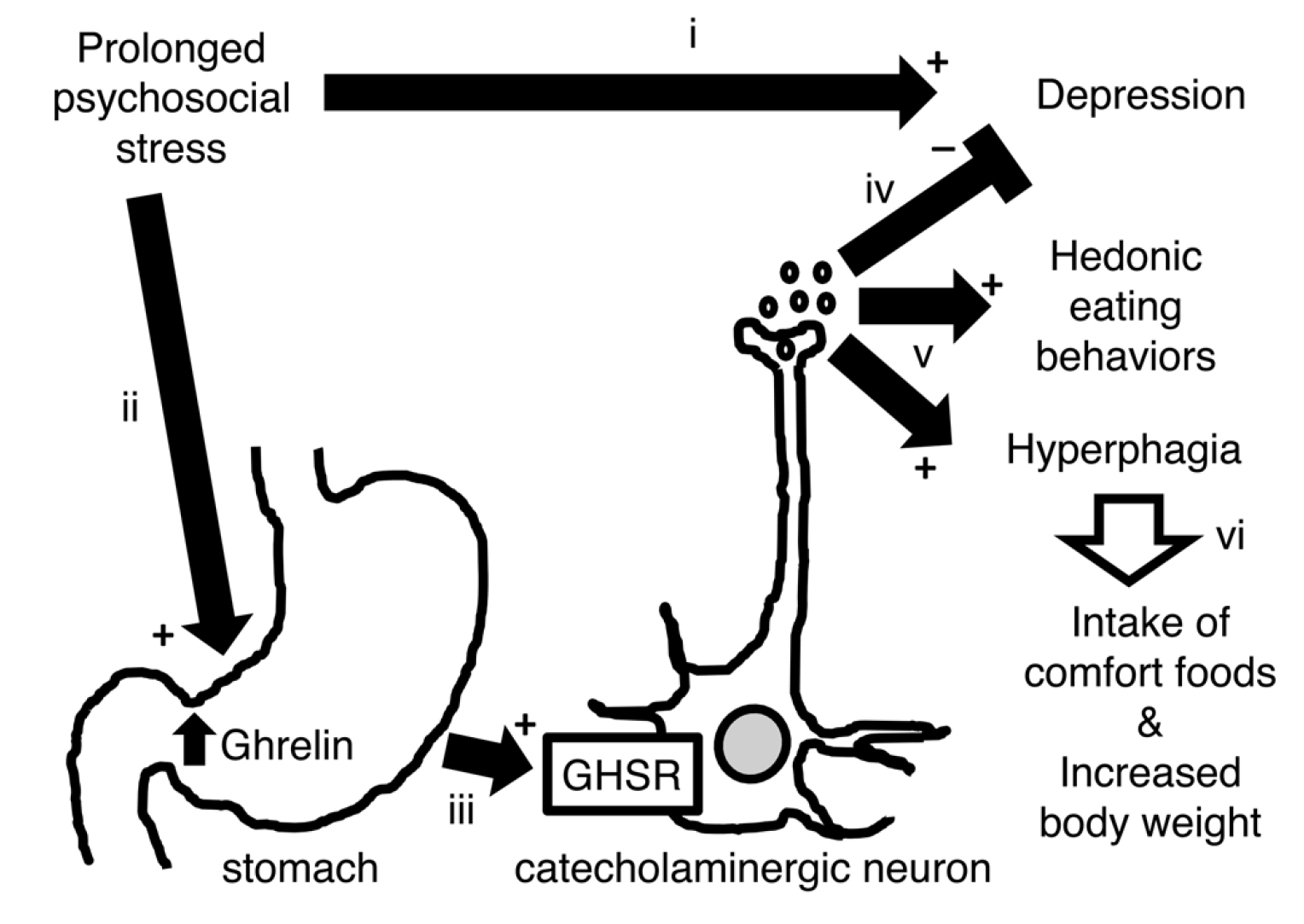
Ghrelin mediates stress-induced food-reward behavior in mice
This manuscript demonstrated that ghrelin stimulates stress-based comfort food eating. This and its antidepressant-like effects involve engagement of ghrelin receptor-expressing catecholaminergic (mostly dopaminergic) neurons.
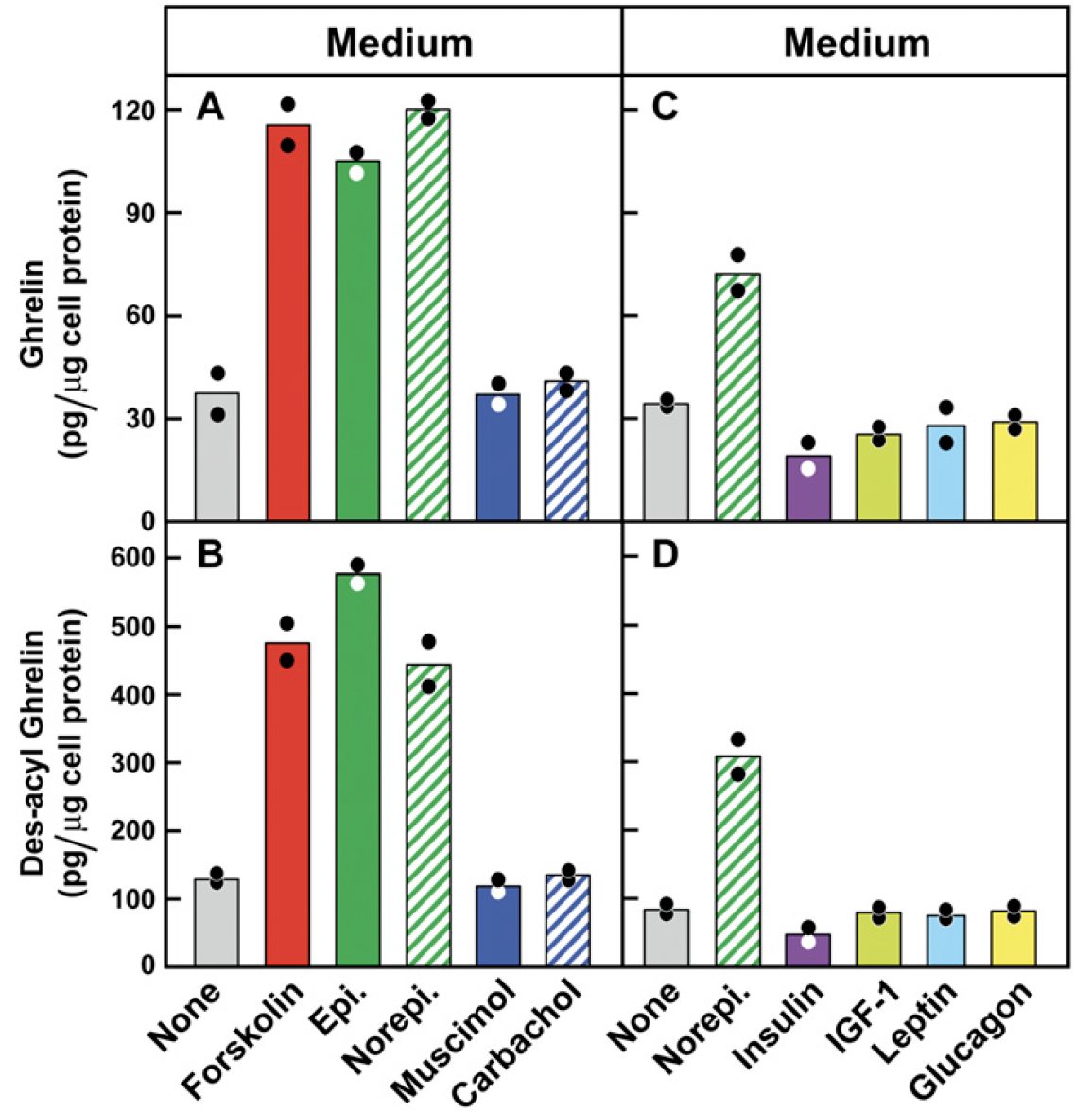
Zigman Lab
This study represents the first description of a molecular pathway (activation of beta1-adrenergic receptors) working directly within ghrelin cells to control ghrelin biosynthesis and secretion.
Ghrelin increases the rewarding value of high-fat diet in an orexin-dependent manner
Zigman Lab
This paper was the first to define essential roles for ghrelin in mediating reward-based eating, including operant responding and conditioned place preference for high-fat diet.
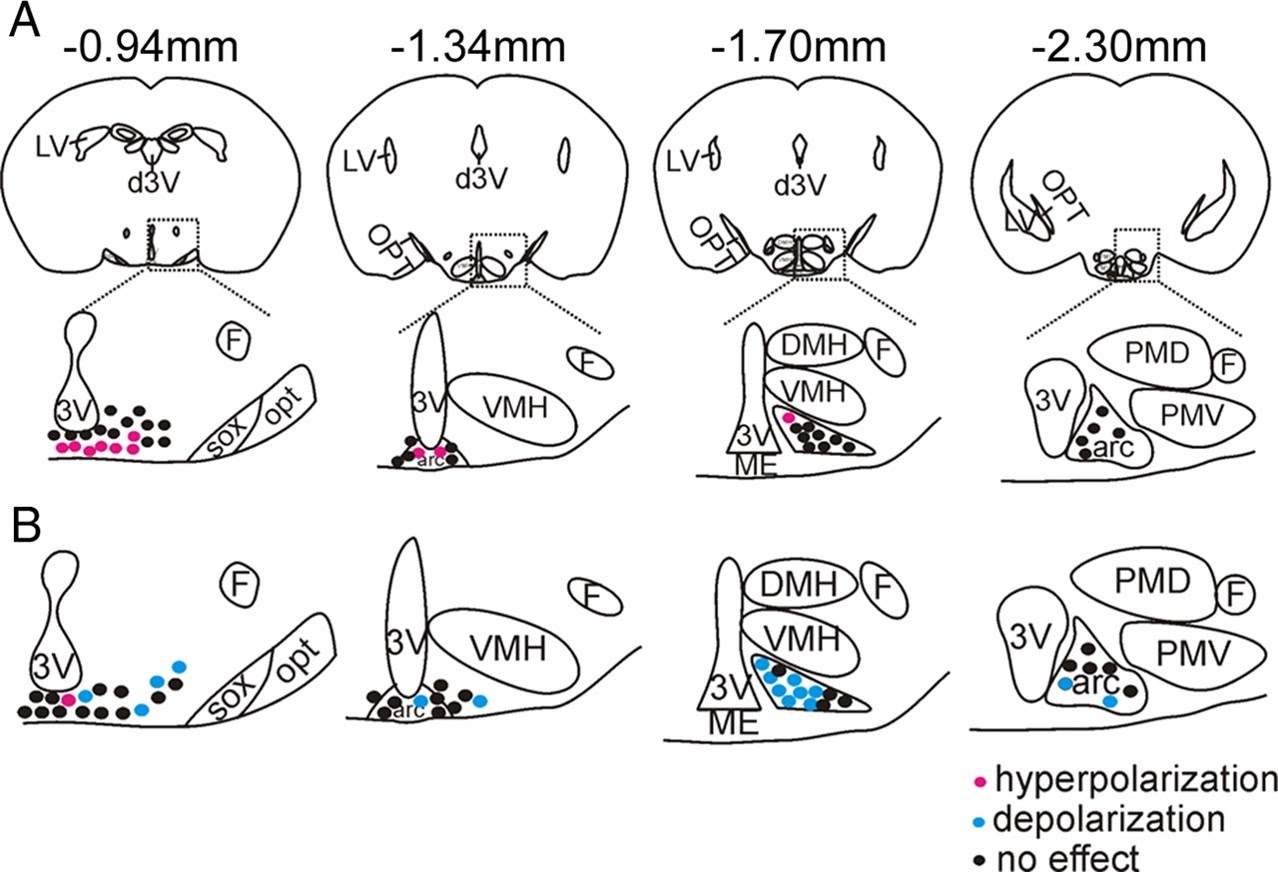
Heterogeneity of arcuate POMC neurons
Williams Lab
This work suggested that cross talk between leptin and insulin occurs within a network of cells rather than within individual POMC neurons.
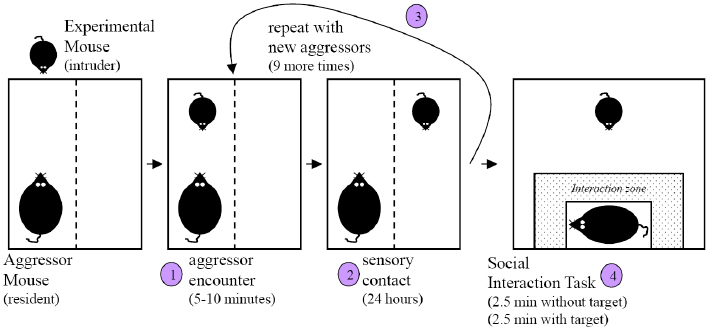
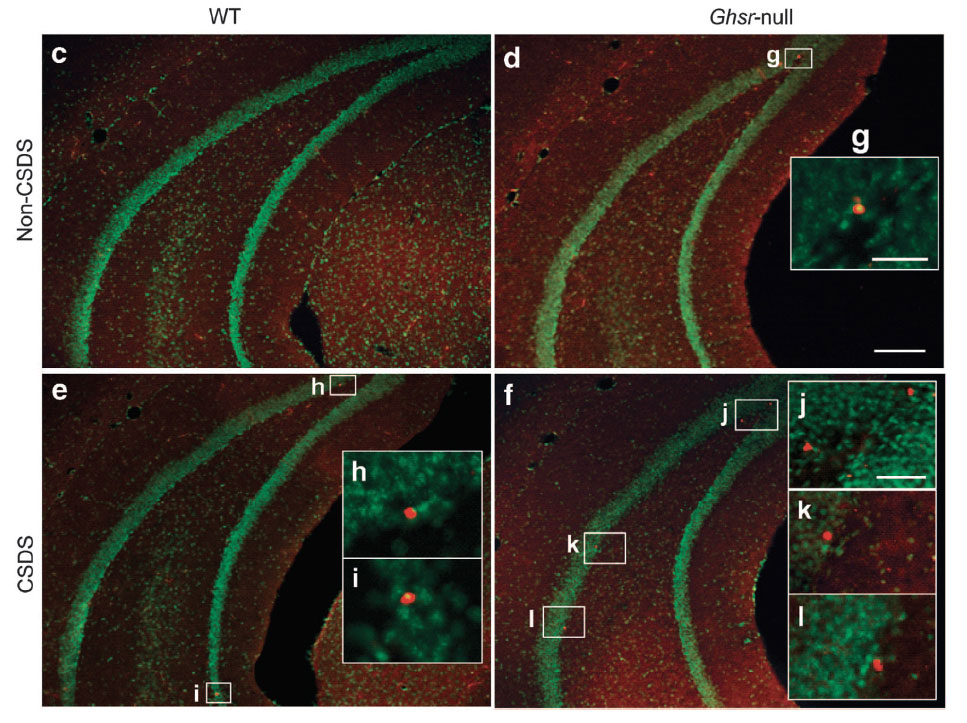
The orexigenic hormone ghrelin defends against depressive symptoms of chronic stress.
Zigman Lab
This manuscript was the first to demonstrate antidepressant-like and anxiolytic-like behavioral effects of ghrelin, including antidepressant-like effects in the setting of chronic stress.

Elmquist Lab
We found that restoring leptin signaling in the arcuate nucleus of leptin deficient mice markedly improved hyperinsulinemia and normalized blood glucose levels and locomotor activity. These data demonstrate that leptin signaling in the arcuate is sufficient for mediating leptin's effects on glucose homeostasis and locomotor activity.
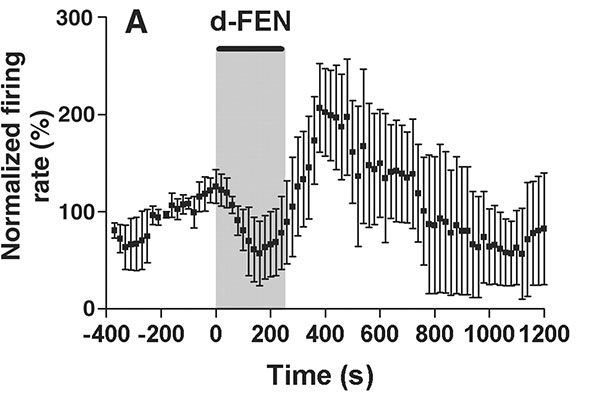
The activation of central melanocortin pathways by fenfluramine
Elmquist Lab
We show that the anorexic effects of the serotonergic drug, D-fenfluramine (d-FEN), are mediated through the central melanocortin system. Our results suggest that drugs targeting these downstream melanocortin pathways may act in part in a similar manner to d-FEN to decrease food intake and body weight, and may yield fewer 5-HT–related side effects.
Elmquist Lab
We found that pro-opiomelanocortin (POMC) cells that express leptin receptors (LEPR) are required for coordinating hepatic glucose production and for the fasting-induced fall in leptin levels, independent of changes in fat mass. We also identify a role for sympathetic nervous system regulation of the inhibitory adrenergic receptor (ADRA2A) in regulating leptin production. Collectively, our findings highlight a previously unrecognized role of POMC neurons in regulating leptin levels.
Elmquist Lab
We found that replacement of either desacetyl-α-MSH or α-MSH into mice mouse model with a targeted mutation in the pro-opiomelanocortin (Pomc) gene significantly reverses excess body weight and fat mass gained compared to wild type (WT) (Pomcwt/wt) mice. This study shows that both desacetyl-α-MSH and α-MSH peptides as regulators of energy balance and highlight a previously unappreciated physiological role for desacetyl-α-MSH.
SF-1 expression in the hypothalamus is required for beneficial metabolic effects of exercise
Elmquist Lab
We found that the expression of the steroidogenic factor-1 (SF-1) nuclear receptor in ventromedial hypothalamus (VMH) neurons is required for the beneficial effects of exercise on metabolism. VMH-specific deletion of SF-1 blunts (a) the reductions in fat mass, (b) improvements in glycemia, (c) increases in energy expenditure that are associated with exercise training, and (d) attenuates metabolic responses of skeletal muscle to exercise, including induction of PGC-1α expression.
Melanocortin 4 receptors reciprocally regulate sympathetic and parasympathetic preganglionic neurons
Elmquist Lab
We found that melanocortin 4 receptor (MC4R) agonists inhibit parasympathetic preganglionic neurons in the brainstem. In contrast, MC4R agonists activate sympathetic preganglionic neurons in the spinal cord. Deletion of MC4Rs in cholinergic neurons resulted in elevated levels of insulin. Furthermore, re-expression of MC4Rs specifically in cholinergic neurons restores obesity-associated hypertension in MC4R null mice. These findings provide a cellular correlate of the autonomic side effects associated with MC4R agonists and demonstrate a role for MC4Rs expressed in cholinergic neurons in the regulation of insulin levels and in the development of obesity-induced hypertension.
Elmquist Lab
We found that restoring leptin signaling in the arcuate nucleus of leptin deficient mice markedly improved hyperinsulinemia and normalized blood glucose levels and locomotor activity. These data demonstrate that leptin signaling in the arcuate is sufficient for mediating leptin's effects on glucose homeostasis and locomotor activity.
The activation of central melanocortin pathways by fenfluramine
Elmquist Lab
We show that the anorexic effects of the serotonergic drug, D-fenfluramine (d-FEN), are mediated through the central melanocortin system. Our results suggest that drugs targeting these downstream melanocortin pathways may act in part in a similar manner to d-FEN to decrease food intake and body weight, and may yield fewer 5-HT–related side effects.
The Molecular Diversity of Vagal Afferents Revealed
Gautron Lab
The Gautron Lab is interested in understanding the molecular diversity of vagal afferents in the mouse. Color coding corresponds to neuronal subtypes connected to specific visceral areas (green, blue, purple, red) or uncertain areas (grey). The size of the circles corresponds to the relative proportions of each identified neuronal subtype. Abbreviations: AP/NTS: area postrema and nucleus of the solitary tract; NG, nodose ganglion; JG, jugular ganglion; GI, gastrointestinal; IGLE, intraganglionic laminar ending. From: Trends Neurosci. 2019 Oct;42(10):663-666.
Williams Lab
Cellular mechanisms required for the anti-diabetes compound liraglutide. We identify critical molecular mechanisms/an ion channel linking anti-obesity/diabetes GLP-1 analogues in arcuate POMC and NPY/AgRP neurons with metabolism.
Cellular and synaptic reorganization of arcuate NPY/AgRP and POMC neurons after exercise
Williams Lab
Single workout can boost metabolism for days – We demonstrate that neurons in mice that influence metabolism are active for up to two days after a single workout. The research offers new insight into the brain’s potential role in fitness and – in the longer term – may provide a target for developing therapies that improve metabolism.
Ire1α in Pomc Neurons Is Required for Thermogenesis and Glycemia
Williams Lab
A molecular link between ER stress and leptin/insulin resistance. We show that Ire1α-Xbp1s and associated molecular targets link ER stress in arcuate Pomc neurons to aspects of normal energy and glucose homeostasis.
TrpC5 mediates acute leptin and serotonin effects via Pomc neurons
Williams Lab
Identification of an ion channel necessary for hormone and anti-obesity drug to suppress eating - We identified an ion channel required for brain cells to suppress eating behavior in response to the hormone leptin or to the anti-obesity drug lorcaserin.
Xbp1s in Pomc neurons connects ER stress with energy balance and glucose homeostasis
Williams Lab
Cell-nonautonomous control of the UPR: Mastering energy homeostasis - Endoplasmic reticulum (ER) stress and activation of the unfolded protein response (UPR) in hypothalamic neurons are common features of obesity, resulting in leptin and insulin resistance. We demonstrate, for the first time, cell-nonautonomous UPR signaling between brain and liver in the context of glucoregulation.
Heterogeneity of arcuate POMC neurons
Williams Lab
This work suggested that cross talk between leptin and insulin occurs within a network of cells rather than within individual POMC neurons.
LEAP2 changes with body mass and food intake in humans and mice
Zigman Lab
This study was the first to measure the effects of various metabolic differences (body mass, feeding status, bariatric surgery) on human plasma LEAP2 levels.
Ghrelin mediates stress-induced food-reward behavior in mice
This manuscript demonstrated that ghrelin stimulates stress-based comfort food eating. This and its antidepressant-like effects involve engagement of ghrelin receptor-expressing catecholaminergic (mostly dopaminergic) neurons.
Zigman Lab
This study represents one of the first descriptions of a molecular pathway (activation of beta1-adrenergic receptors) working directly within ghrelin cells to control ghrelin biosynthesis and secretion.
Ghrelin increases the rewarding value of high-fat diet in an orexin-dependent manner
Zigman Lab
This paper was the first to define essential roles for ghrelin in mediating reward-based eating, including operant responding and conditioned place preference for high-fat diet.
The orexigenic hormone ghrelin defends against depressive symptoms of chronic stress.
Zigman Lab
This manuscript was the first to demonstrate antidepressant-like and anxiolytic-like behavioral effects of ghrelin, including antidepressant-like effects in the setting of chronic stress.